Deadheading Hydrangeas: When to Cut Without Losing Blooms
A faded hydrangea flower can be removed in one careful cut, or it can take next summer’s display with it. For most shrubs, follow the spent stem down and cut just above a healthy pair of leaves; on bigleaf, mountain, and oakleaf hydrangeas, stop before late-summer cuts begin removing formed flower buds. That distinction is the whole deadheading problem.
Deadheading hydrangeas is mainly a choice about appearance. It can tidy the shrub and remove a collapsing flower head, but it does not turn every cultivar into a repeat bloomer. Before cutting, identify the hydrangea, decide whether you value a clean outline or winter structure, and then make the shallowest cut that achieves that goal.
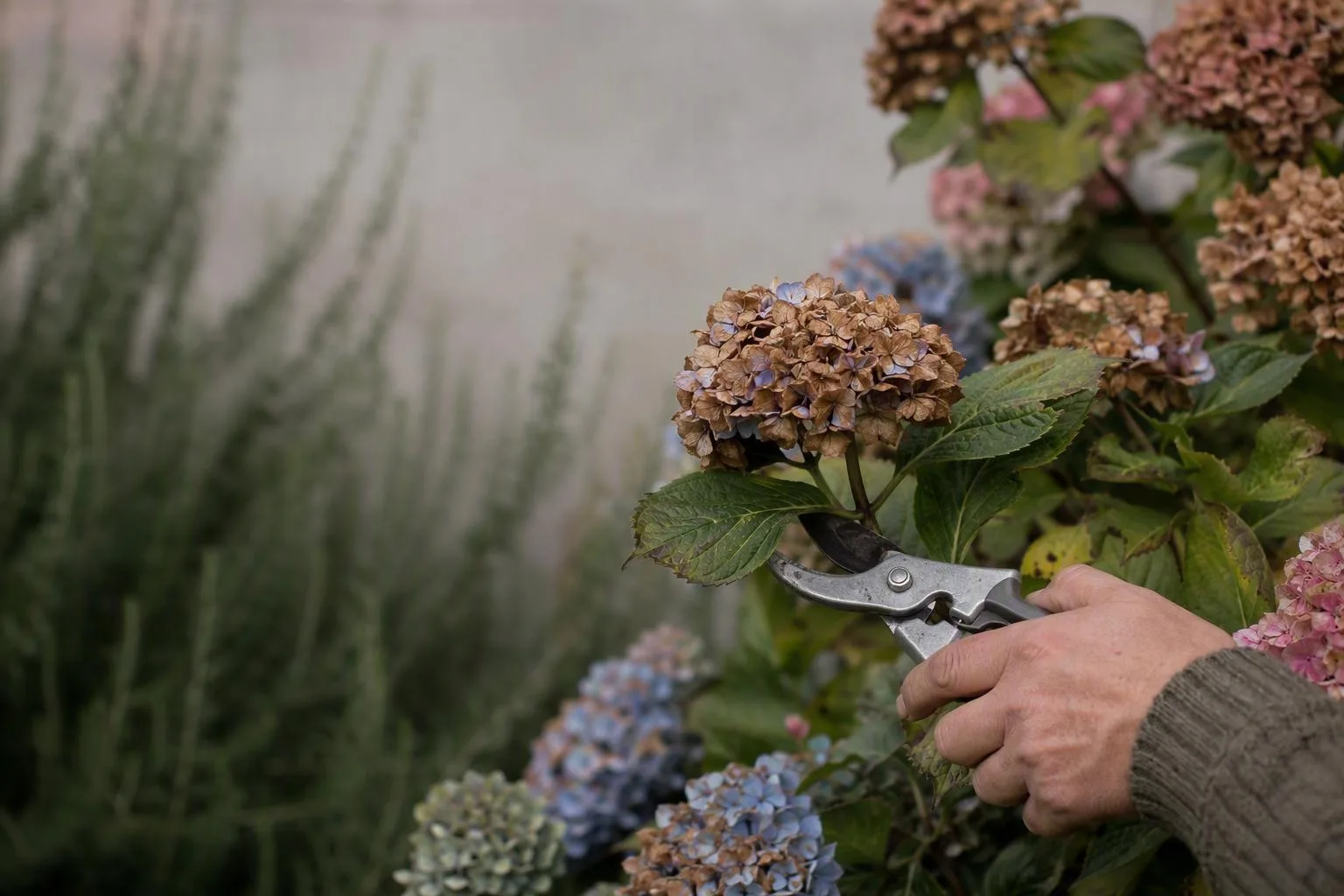
The safe cut: remove the flower head, not next year's buds
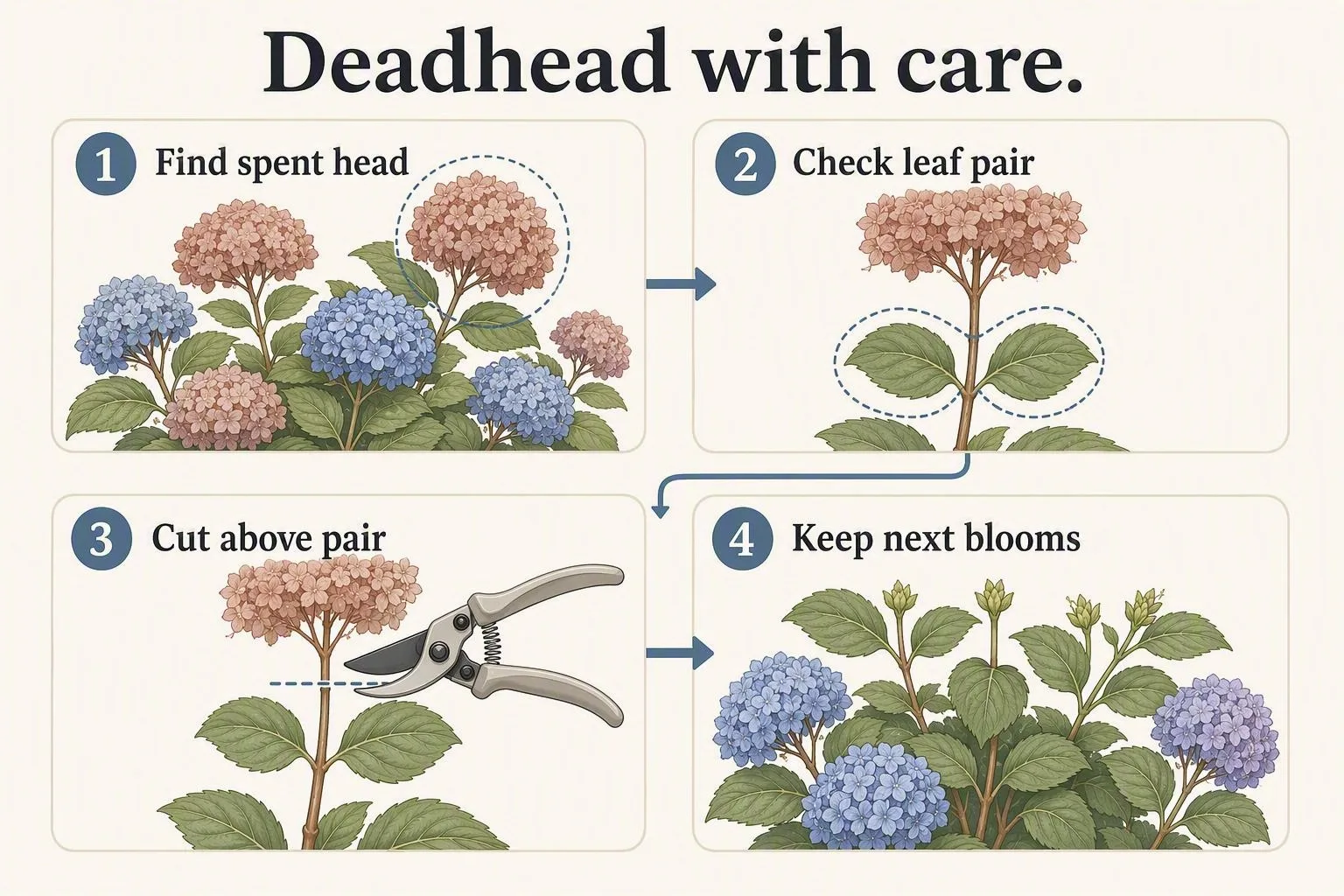
For a first deadheading pass, use clean bypass pruners and remove the flower head with a short length of stem. Trace the flower stem downward until you reach a strong pair of leaves or a pair of plump dormant buds, then cut just above them. Leave enough stem to avoid damaging the node, but don’t leave a long bare wand that will die back and look untidy.
The timing changes the risk. A faded head on a panicle hydrangea can usually be removed during the growing season without threatening the following year’s flowers because that shrub makes its flowering shoots during the next growth cycle. A faded head on a bigleaf hydrangea carries a different risk: the stem below it may already hold next season’s flower buds. A late cut can look neat now and produce a bare shrub next summer.
That is deadheading. Hard pruning removes framework or large sections of growth and belongs to a species-specific pruning plan. If you’re unsure which wood your shrub flowers on, use the more conservative cut and consult Hydrangea pruning by type: old wood versus new wood before shortening whole stems.
First identify the hydrangea: flower timing depends on the wood it uses
Don’t begin with the label “hydrangea.” Begin with the shrub’s flowers, leaves, and stems. The common garden types behave differently enough that one universal calendar is a trap.
| Type | Useful clues | Deadheading risk |
|---|---|---|
| Bigleaf, Hydrangea macrophylla | Large rounded leaves; mophead or lacecap flowers; stems often remain woody through winter. | High after late summer because flower buds may already be set on older stems. |
| Mountain, Hydrangea serrata | Usually smaller leaves and flatter lacecap-style flower clusters. | Similar old-wood caution to bigleaf types. |
| Oakleaf, Hydrangea quercifolia | Oak-shaped leaves, peeling bark, cone-like flower clusters. | Late cuts can remove the next season’s flower-bearing growth. |
| Panicle, Hydrangea paniculata | Conical flower heads and often vigorous upright stems. | Deadheading is generally less likely to remove next year’s buds, though hard pruning is a separate decision. |
| Smooth, Hydrangea arborescens | Rounded flower heads, often on relatively flexible new stems. | Routine deadheading has a wider window than on old-wood types. |
Flowering wood is the practical question. Old-wood shrubs carry the next display through buds formed before winter; new-wood shrubs produce flowering shoots during the current growing season. Cultivar breeding complicates that simple split, especially among reblooming bigleaf hydrangeas, so keep the plant tag or nursery record if you have it. The external resource University extension identification guides for Hydrangea macrophylla, paniculata, arborescens, and quercifolia is a sensible place to compare photographs and botanical descriptions.
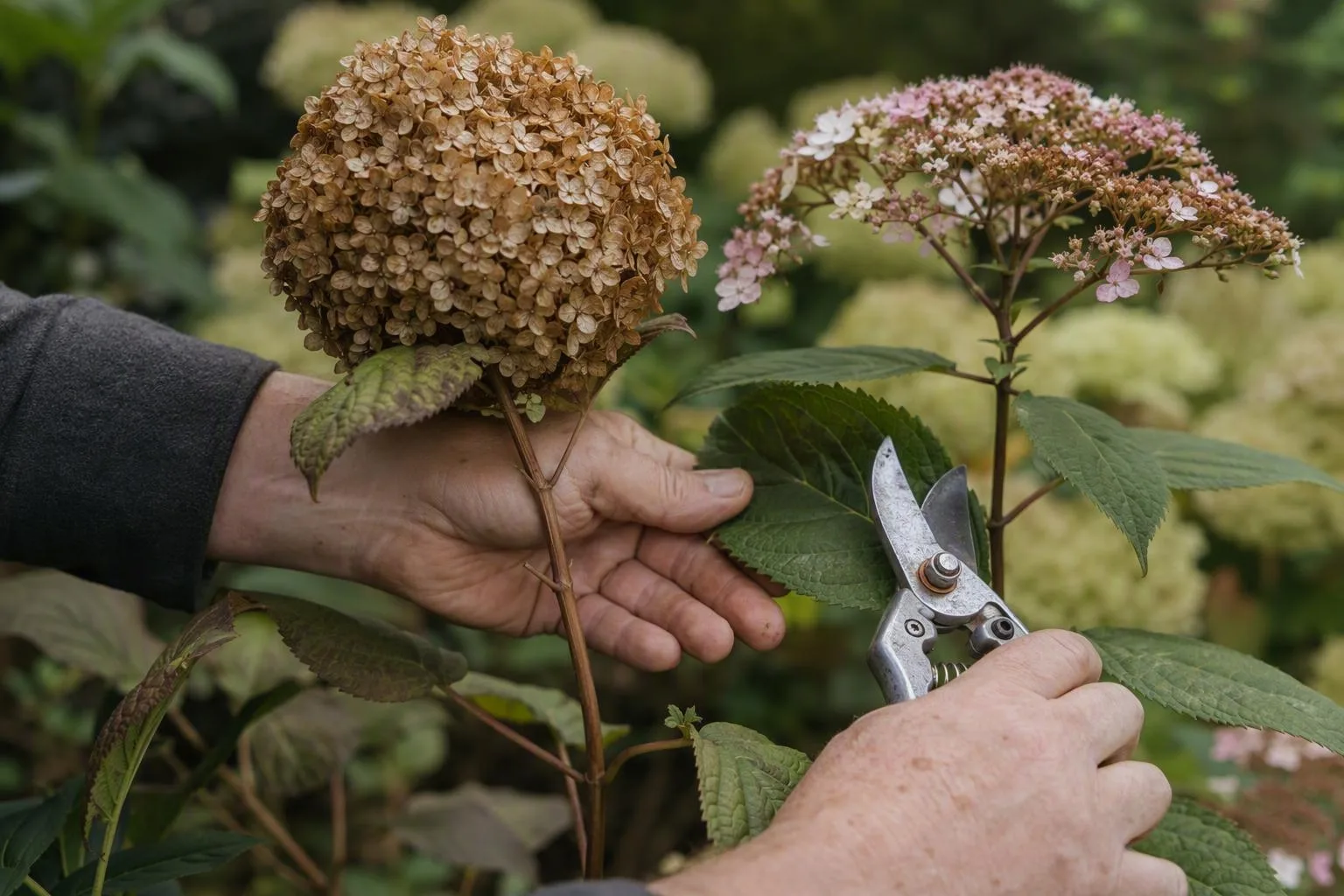
A cut-by-cut calendar for old-wood hydrangeas
With H. macrophylla, H. serrata, and H. quercifolia, the safest cosmetic window is usually soon after the first flower display fades, while you can still see the stem structure clearly. Make a shallow cut above a healthy leaf pair rather than shortening the stem to the ground.
Why act early? The plant has more of the season left to reveal which shoots are vigorous, and you avoid treating a late-season stem as disposable when it may be carrying next year’s buds. In a mild region, a later light cut may still work. In a colder zone, the margin for error narrows as autumn approaches and winter injury becomes another way to lose those buds.
Leaving the heads in place through winter is often the better tradeoff for an exposed bigleaf or oakleaf shrub. The dried flower clusters provide rough structure, and the intact stems give you more material to inspect in spring. If the heads collapse into a wet mass or harbor visibly diseased tissue, remove that material and dispose of it rather than adding it to a cool home compost heap.
For winter protection techniques, see How to protect bigleaf hydrangea buds through winter. Deadheading can improve the outline; it cannot replace insulation, sheltered placement, or waiting for spring growth to reveal which buds survived.
Panicle and smooth hydrangeas give you a wider cutting window
Panicle and smooth hydrangeas are more forgiving targets for ordinary deadheading. Once a flower head has browned, follow its stem down and cut above a healthy node. You can do this during the flowering season, provided the plant is not wilted from heat or drought.
The wider window comes from the way these shrubs flower: the shoots that carry next season’s flowers are produced during the next growing cycle rather than being fully dependent on buds formed the previous summer. That makes a faded-head cut less consequential than the same cut on an old-wood bigleaf.
Still, don’t confuse removing flowers with renewal pruning. A panicle hydrangea may benefit from a considered late-winter reduction when the aim is stronger stems or larger heads; a smooth hydrangea may be managed for a different shape altogether. That cut changes the shrub’s framework. Deadheading changes only a small section of a flowering shoot. For the larger seasonal decision, use When to prune panicle hydrangeas for larger flower heads.
Deadheading may save the shrub from carrying old flower tissue, but it is a poor tool for forcing a second flush. Treat it as grooming unless the cultivar and growing conditions already support repeat flowering.
Reblooming hydrangeas: deadhead for appearance, not as a bloom guarantee
Reblooming or remontant bigleaf hydrangeas, including Endless Summer-type plants, can produce flowers from older and newer growth. That gives them more than one route to flowering, but the routes still depend on viable buds, adequate light, water, and a cultivar suited to the local season.
Deadhead these plants if you want a cleaner shrub. Make a shallow cut above a healthy leaf pair and avoid turning a cosmetic job into hard pruning. If the shrub has suffered winter injury, drought, severe shade, or a late frost, removing every old stem will reduce the number of possible flowering sites just when the plant needs them.
The useful expectation is simple: deadheading removes old flowers; it does not guarantee another flush. Repeat flowering remains a biological capacity of the cultivar, not a reward the pruner can purchase with extra cuts.
Use the node, not the calendar, to choose the exact cut point
Calendar advice gets you near the right decision. The node tells you where to place the blade.
- Choose a dry moment when the stems are easy to see. Avoid cutting a wilted shrub during a heat spell; it has a more urgent problem than appearance.
- Use sharp bypass pruners. Support the stem with your free hand and make one clean cut rather than squeezing repeatedly.
- Follow the spent flower stem downward until you find a healthy leaf pair or firm dormant buds.
- Cut slightly above that node, angled enough to keep water from sitting on the cut surface, while avoiding an exaggerated stub.
- Remove brown, crushed, soft, or visibly diseased tissue back to sound wood. If disease is suspected, clean and disinfect the blades before moving to another shrub.
A healthy node is usually firm and attached to sound green-brown or brown stem tissue. Don’t mistake a tiny swelling immediately beneath the flower head for a reason to cut lower; inspect the next strong node first. The aim is not to make every stem the same length. It is to leave the plant with a viable growth point and as much useful wood as the flowering type requires.
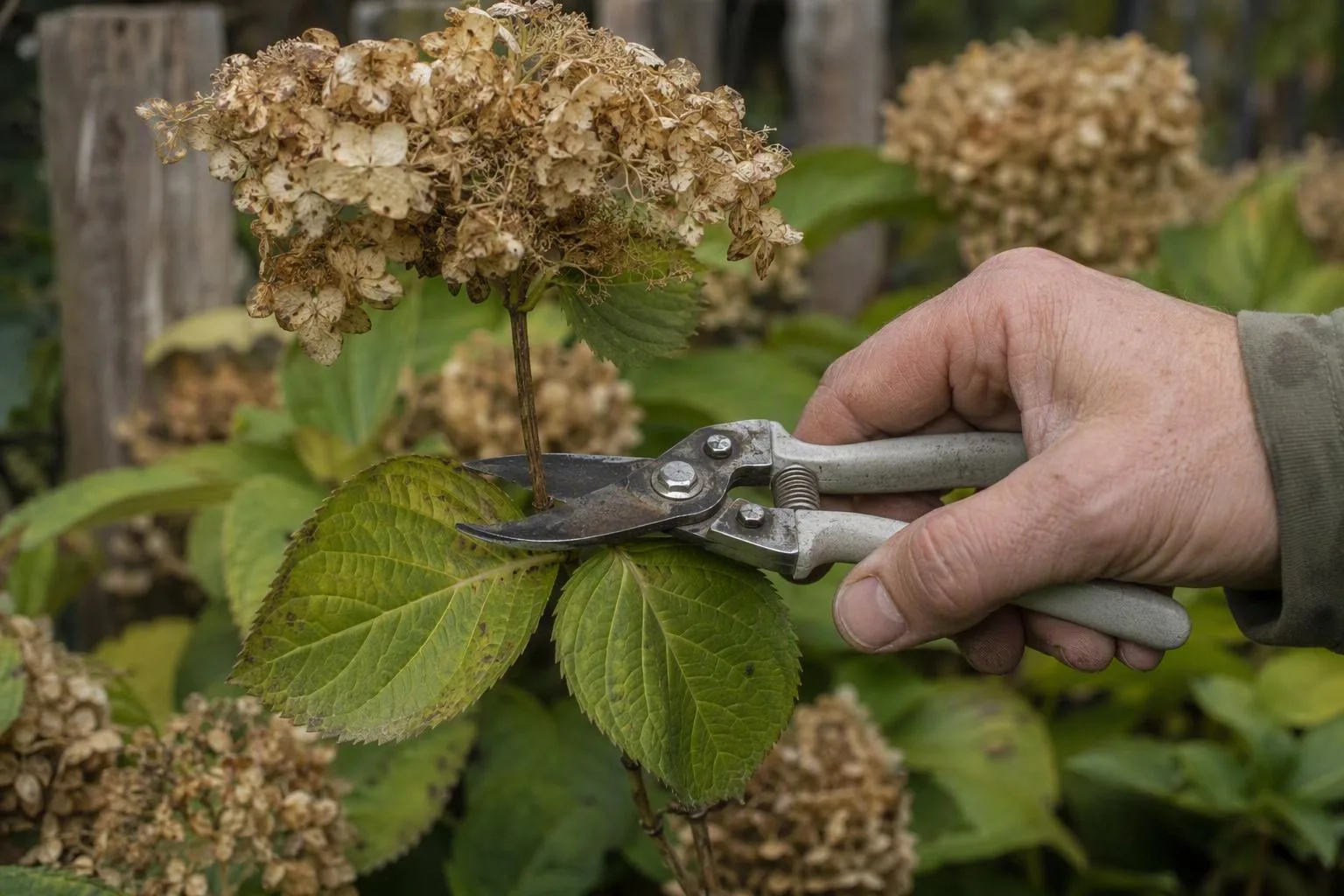
For tool hygiene, the relevant reference is Extension recommendations for cleaning and disinfecting pruning tools when disease is suspected. Clean blades matter most when you move between plants with suspicious lesions, cankers, or soft decay; healthy routine deadheading does not require theatrical sterilizing after every single cut.
Three situations where leaving the flower heads is the better decision
First, leave them for winter structure. Oakleaf and panicle flower heads can hold their shape after browning, catching frost and giving a leafless border some height. Remove them in spring if the look no longer earns its place.
Second, delay cuts on vulnerable old-wood plants. If a bigleaf hydrangea sits in a cold, exposed position, the dried heads can help you identify the upper stems that survived winter. Waiting also avoids cutting through buds you can’t yet distinguish.
Third, leave a newly planted, drought-stressed, or frost-damaged shrub alone. A plant establishing roots has a different priority from a mature shrub being groomed. Removing a few heads is unlikely to transform its health, while extra handling and unnecessary cuts add little value.
Deadheading is an optional intervention. The cost is small for one flower head, but the cost rises when “tidying” becomes a sweep through every stem.
The mistakes that look like deadheading but cost the next flush
The classic failure is a bigleaf hydrangea that grows plenty of leaves the following year but produces few flowers. The gardener often reports that the shrub looked healthy after pruning. That symptom points the investigation toward lost old-wood buds, winter injury, shade, or a combination rather than toward a failure of the plant to make leaves.
Another mistake is treating every hydrangea like a new-wood panicle. A shearing cut across the whole shrub may remove the flowering framework of an old-wood type. It also creates a blunt outline and a cluster of weak regrowth instead of a naturally layered plant.
Cutting during drought can leave ragged stems and force the plant to seal wounds while water is limited. Dull pruners crush the stem rather than slicing it, leaving a damaged end that dries back farther than intended. Cutting below the strongest node creates the opposite problem: the flower head is gone, but so are useful buds.
If your hydrangea fails to bloom after pruning, record three details before cutting again: the hydrangea type, the month and height of the previous cuts, and whether the stems were alive after winter. Then compare that evidence with Why hydrangeas do not bloom: frost, shade, and pruning causes. Diagnosis beats repeating the same cut with more confidence.
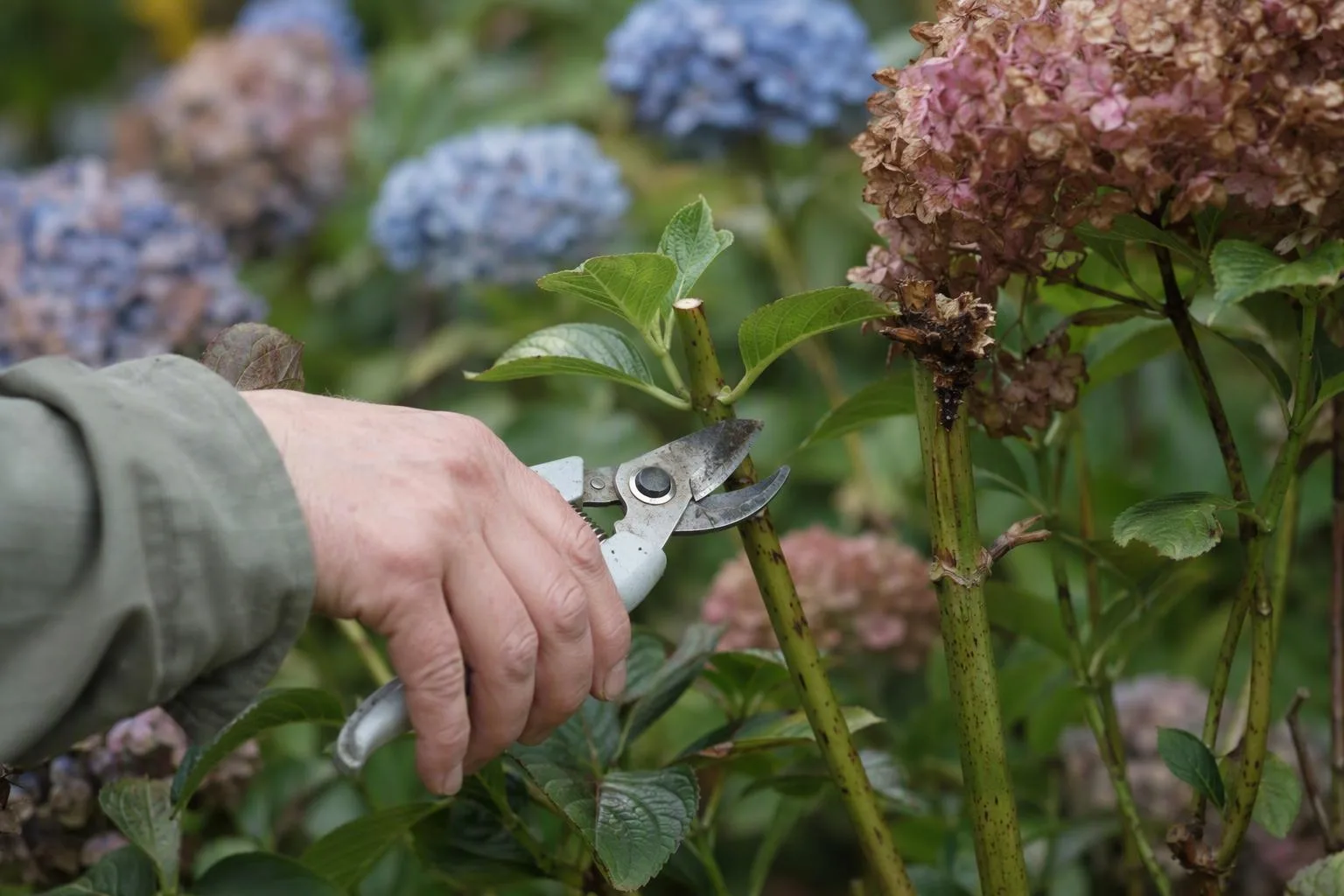
A small decision tree for the next faded flower
Use this sequence at the shrub rather than relying on a generic hydrangea deadheading schedule:
- Identify the plant. Check the label, flower shape, leaf shape, and stem habit. If you cannot identify it, assume a late cut may be risky.
- Ask what matters today. Are you removing a collapsing head, shaping the shrub, or trying to make it flower again? Only the first two are reasonable deadheading goals.
- Check the stem. Find a healthy leaf pair or dormant buds below the flower. On old-wood types, avoid deep or late cuts.
- Consider the season. In zones 4–6, autumn frost and winter exposure can arrive before a cut has much cosmetic value. In warmer parts of zones 7–9, the same calendar date may leave more growing time, but local frost and heat still control the margin.
- Make one conservative cut. Remove the head and a short length of stem. Reassess before making another cut.
If appearance is the only reason, you can stop after a few representative heads. This is a better test than stripping the whole shrub at once: you get the tidier view without committing every stem to the same treatment.
The next decision is whether you want flowers, structure, or insurance
Choose one of three sensible outcomes. Remove a few spent heads now if you want a cleaner border. Leave old-wood stems intact if winter structure and bud insurance matter more. Or mark the shrub for species-specific pruning later, particularly if it is a panicle or smooth hydrangea that needs framework work rather than routine grooming.
Next season’s flowers are decided by more than the faded head in front of you. Your job is to cut only where the benefit is clear and the bud cost is understood.
FAQ: deadheading hydrangeas without guessing
Can I deadhead hydrangeas in the fall?
Sometimes. Fall cuts are riskier on old-wood hydrangeas because next year’s flower buds may already be present. In colder or exposed gardens, leaving the heads until spring is often the safer choice.
Will deadheading make my hydrangea bloom again?
It may improve appearance and removes the old flower, but it does not force a second flush. Repeat flowering depends on the cultivar, light, moisture, season length, and surviving buds.
Should I deadhead an Endless Summer hydrangea?
Yes, if you want a tidier shrub. Cut shallowly above a healthy leaf pair and avoid hard pruning, because reblooming bigleaf cultivars can flower from more than one age of wood.
Do I need to sterilize pruners between hydrangeas?
Clean and disinfect tools when moving between plants with suspected disease or damaged tissue. For healthy shrubs, sharp, clean blades and removal of visibly infected material are the practical priorities.
Frequently Asked Questions
Can I deadhead hydrangeas in the fall?
Sometimes, but late-fall cutting is risky on old-wood hydrangeas because next year's flower buds may already be set; in cold zones, leaving the heads until spring is often the safer cosmetic choice.
Will deadheading make my hydrangea bloom again?
Deadheading mainly improves appearance and can redirect limited resources from seed production, but it does not force a second flush; repeat flowering depends chiefly on species, cultivar, light, moisture, and surviving buds.
Should I deadhead an Endless Summer hydrangea?
Yes, if you want a tidier shrub, but make shallow cuts above a healthy leaf pair and avoid hard pruning because the cultivar can flower from old and new wood.
Do I need to sterilize pruners between hydrangeas?
Clean and disinfect tools when moving between plants with suspected disease or damaged tissue; routine deadheading of healthy shrubs mainly requires sharp, clean blades and removal of visibly infected material.